If you’ve ever driven past a building site in Sydney, you’ve seen construction scaffolding in action. It’s the metal framework holding up workers, tools, and materials high above the ground. But not all scaffolding is the same. Picking the wrong type can slow down your project, blow out your budget, or worse – put workers at risk.
At Anywhere Scaffolding Sydney, we’ve spent years helping builders, tradies, and homeowners across the city choose the right construction scaffolding for their job. In this guide, we’ll walk you through the main types of construction scaffolding, when to use each one, and what to think about before you hire.
What Is Construction Scaffolding, and Why Does the Type Matter?
Construction scaffolding is a temporary structure built to support workers and materials during construction, repair, or maintenance work. It gives your crew safe, stable access to areas they couldn’t otherwise reach – rooflines, upper-storey walls, ceilings, and awkward angles.
The right construction scaffolding depends on a few things: how tall your building is, how much weight the scaffold needs to carry, how long the job will run, and how much space you have on site. Choosing badly here doesn’t just cost you money. It can also mean delays, failed inspections, or a scaffold that simply isn’t fit for the job.
That’s why understanding your options before you book matters. Let’s break down the main types of construction scaffolding used across Australian building sites.
1. Tube and Coupler Scaffolding
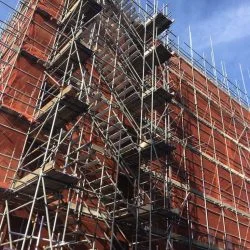
Tube and coupler scaffolding is one of the oldest and most flexible forms of construction scaffolding still used today. It’s made from individual steel or aluminium tubes joined together with couplers, which means it can be built into almost any shape – around curves, corners, or irregular structures.
Best for: Heritage buildings, complex facades, industrial sites, or any job where a standard modular frame won’t fit the shape of the structure.
The trade-off is time. Because every joint is assembled by hand, tube and coupler scaffolding takes longer to erect than pre-fabricated systems.
2. Frame (Modular) Scaffolding
Frame scaffolding, sometimes called modular scaffolding, is probably the type most people picture when they think of construction scaffolding. It comes in pre-built sections that lock together, making it quick to assemble and dismantle.
Best for: Residential renovations, small-to-medium commercial jobs, and straightforward rectangular buildings.
This is one of the most commonly hired forms of construction scaffolding in Sydney because it’s cost-effective, quick to install, and works well for most standard house and low-rise jobs.
Not sure if frame scaffolding suits your project?
Talk to our team at Anywhere Scaffolding Sydney for a free site assessment — we’ll recommend the right construction scaffolding setup before you commit to a quote.
3. System Scaffolding
System scaffolding uses pre-engineered components with fixed connection points, giving it more strength and stability than a standard frame system. It’s designed for larger loads and taller builds.
Best for: Multi-storey commercial construction, apartment blocks, and sites where heavier loads or longer working platforms are needed.
Because the connection points are standardised, system scaffolding also tends to pass compliance checks more smoothly, which matters a lot on bigger commercial builds.
4. Cantilever Scaffolding
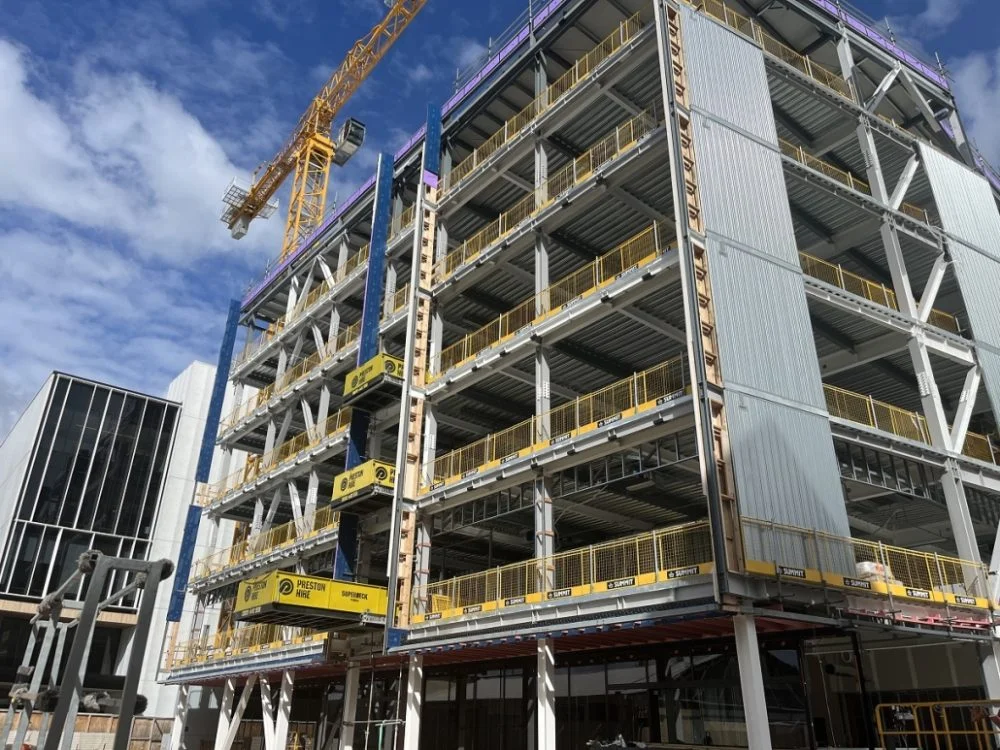
Cantilever scaffolding is a specialised type of construction scaffolding that doesn’t rely on ground-level support. Instead, it’s anchored into the building itself and projects outward, supported by needles or beams.
Best for: Sites with no ground space for standard footings – think busy footpaths, laneways, or building edges right on the property line.
This type requires careful engineering, since the entire load is transferred back into the structure rather than the ground. It’s not something to attempt without an experienced scaffolding contractor.
5. Suspended Scaffolding
Suspended scaffolding hangs from the roof or upper structure of a building using ropes or cables, rather than being built up from the ground. It’s the kind you’ll often see used by window cleaners and facade workers on high-rise buildings.
Best for: High-rise maintenance, window cleaning, facade repairs, and painting on tall buildings where ground-up scaffolding isn’t practical.
Because it’s suspended rather than fixed, this type of construction scaffolding needs regular inspection and strict adherence to safety standards – the margin for error is smaller.
6. Trestle Scaffolding
Trestle scaffolding is a simpler, lower-height option, built using moveable platforms called trestles or ladders with a working platform on top.
Best for: Indoor work, low-height jobs like painting or plastering, and short-duration tasks where a full scaffold system would be overkill.
It’s quick to set up and take down, which makes it popular for smaller interior jobs where height requirements are modest – generally under a few metres.
Planning a multi-storey or commercial build?
Get a fast, obligation-free quote from Anywhere Scaffolding Sydney and let our licensed scaffolders handle the compliance side while you focus on the build.
7. Mobile (Rolling) Scaffolding
Mobile scaffolding is built on lockable castor wheels, allowing it to be moved around a site without being dismantled and rebuilt each time.
Best for: Warehouse maintenance, retail fit-outs, and jobs that need scaffolding moved to different spots across a single work session.
This flexibility makes mobile construction scaffolding / Commercial & Industrial Scaffolding Solutions a favourite for jobs that don’t stay in one place for long – though it’s generally limited to lower heights for stability reasons.
How to Choose the Right Construction Scaffolding for Your Project
With so many types of construction scaffolding available, here’s what we recommend weighing up before you hire:
- Height and reach: How far up (or out) do your workers need to go?
- Load requirements: Will you be carrying heavy materials, multiple workers, or bulky equipment on the platform?
- Site conditions: Is there ground space for footings, or do you need a cantilever or suspended solution?
- Project duration: A short job may suit trestle or mobile scaffolding; a multi-month commercial build usually needs system scaffolding.
- Building shape: Standard rectangular structures suit frame scaffolding, while irregular or heritage buildings often need tube and coupler.
- Budget and timeline: Modular systems are usually faster and cheaper to install than custom tube and coupler builds.
If you’re unsure, this is exactly where an experienced construction scaffolding provider earns their keep. A quick site assessment from our team can save you from paying for the wrong setup — or worse, a non-compliant one.
Safety and Compliance: The Non-Negotiable Part
Every type of construction scaffolding used in NSW must meet the requirements set out in AS/NZS 1576, Australia’s national scaffolding standard, along with WorkSafe/SafeWork NSW regulations. This covers everything from load ratings and guardrails to how often a scaffold needs re-inspection.
At Anywhere Scaffolding Sydney, our scaffolders are fully licensed and trained to current Australian standards, and every job we complete is tagged and inspected before anyone steps onto the platform. We don’t cut corners here – a scaffold is only as good as the compliance behind it, and we’ve built our reputation across Sydney on getting this right, job after job.
Why Sydney Builders Choose Anywhere Scaffolding Sydney
We’ve worked across residential, commercial, and industrial sites throughout Sydney, which means we’ve handled just about every scenario this guide covers – heritage terraces needing tube and coupler builds, apartment towers needing full system scaffolding, and quick trestle setups for a weekend repaint. That hands-on experience is what lets us recommend the right construction scaffolding for your specific project, rather than a one-size-fits-all setup.
If you’re planning a project and aren’t sure which type of construction scaffolding fits, get in touch. We’ll assess your site, talk through your timeline and budget, and set you up with a solution that’s safe, compliant, and built for the job.
FAQs
What is scaffolding in construction?
Scaffolding in construction is a temporary structure erected to support workers, tools, and materials during building, repair, or maintenance work. It provides safe access to areas that would otherwise be difficult or dangerous to reach, such as rooflines, upper floors, and building facades.
What are the 7 types of scaffolding?
The seven main types are tube and coupler scaffolding, frame (modular) scaffolding, system scaffolding, cantilever scaffolding, suspended scaffolding, trestle scaffolding, and mobile (rolling) scaffolding. Each suits different site conditions, heights, and load requirements, as covered in detail above.
What do scaffolders get paid in Australia?
Pay varies by state, experience level, and project type. As a general guide, scaffolders in Australia typically earn somewhere between $40 and $60 per hour, with more experienced or advanced-ticketed scaffolders on commercial projects often earning at the higher end, plus penalty rates and allowances for overtime, site conditions, and travel.
What is the 3 to 1 rule for scaffolding height?
The 3:1 rule is a general stability guideline stating that a freestanding scaffold’s height shouldn’t exceed roughly three times its base width without additional bracing, ties, or outriggers. It’s used to reduce the risk of the structure tipping, and actual requirements should always be confirmed against AS/NZS 1576 and a qualified scaffolder’s assessment for your specific site.
How much does scaffolding cost in Sydney?
Costs depend on the scaffold size, height, and hire duration. As a rough guide, small residential jobs might run a few hundred dollars a week, while a full house scaffold for a multi-week job can average around $2,000 to $3,500 in NSW. Larger commercial projects are quoted individually based on scope.
What do scaffolders charge per metre?
Pricing per linear or square metre varies by scaffold type, height, and complexity, but many Sydney scaffolding companies work on a combination of a base setup fee plus a weekly hire rate, rather than a flat per-metre charge. It’s best to get a site-specific quote, since factors like access, ties, and safety extras all affect the final price.
How much do scaffolders make in Sydney?
Sydney scaffolders generally earn between $40 and $60 an hour depending on ticket level and project type, with experienced advanced scaffolders and scaffold supervisors on large commercial builds often earning toward the top of that range, plus overtime and site allowances.
Still weighing up your options?
Call Anywhere Scaffolding Sydney today — we’ll walk your site with you and match you to the safest, most cost-effective construction scaffolding for the job.